https://m.thewirehindi.com/article/hindi-literature-harishankar-parsai-satire/136103
About Parsai:
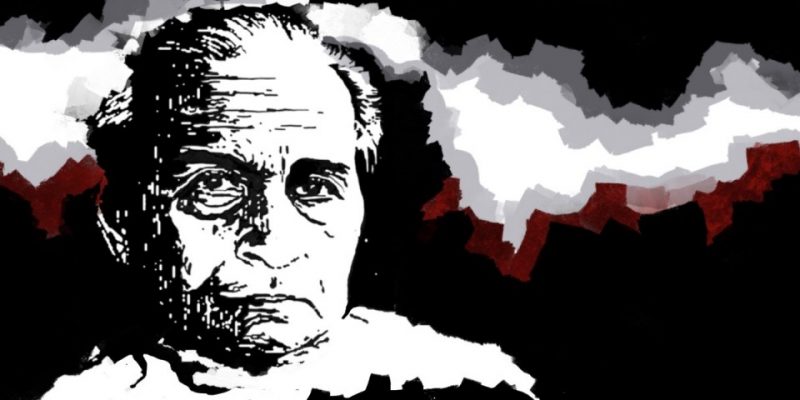
Harishankar Parsai (22 August 1924 – 10 August 1995), was a noted writer, satirist and humorist of modern Hindi literature, majorly known for his simple style of writing firmly eshtablishing vyangya(satire), as respectable and a distinct literary genre.
Parsai was born in Itarsi, Madhya Pradesh. He completed his Masters in Hindi Literature from Nagpur University and also got a diploma in teaching.
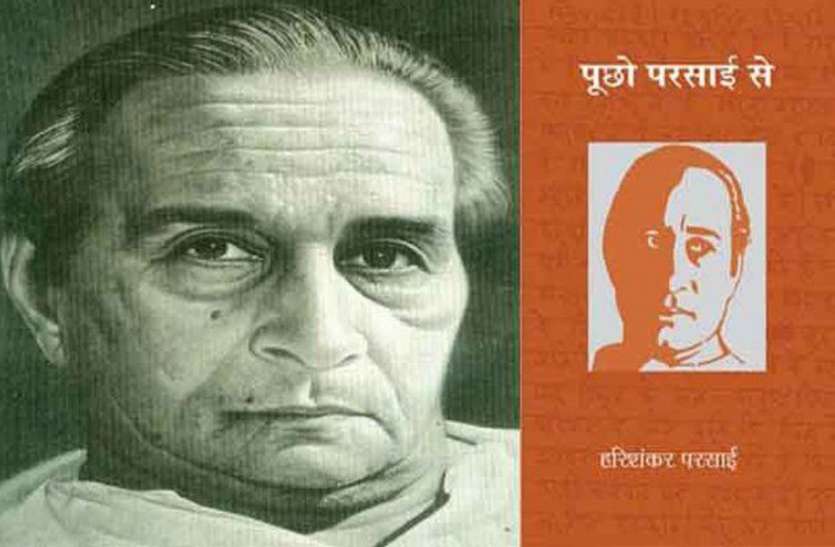
In 1957, he decided to give up his job and lead his life as an independent writer. He wrote regular columns in various newspapers and magazines. Among this was a a daily column in Raipur’s Hindi daily “Deshbandhu”, with a unique format, appropriately titled as “Poochho Parsai Se”, where in the readers sent their questions to which Parsai gave his answers. This was later compiled into a book, nearly 750-page volume, with the same name, published by Rajkamal Prakashan, a classic collection of his wit, range and depth of knowledge and heightened social consciousness.
He started a literature magazine called Vasudha, which made a considerable impact on the Hindi literary scene and acquired the reputation of being a fearless, Left-wing publication. However, it had to be discontinued after the publication suffered economic losses.
By the time of his death, Parsai had revolutionized the art of satire writing in Hindi. Stories and Essays, like ‘Baarat ki waapsi’ and ‘Premchand ke phaté joote’, are also part of the school curriculum in CBSE and NCERT books.
He won Sahitya Akademi Award in 1982, for his satire, “Viklaang Shraddha Ka Daur”/ ‘विकलांग श्रद्धा का दौर’I
A collection of 21 selected stories translated into English by C.M Naim was published in 1994: Inspector Matadeen on the Moon, and was reprinted in 2003 by Katha Press, New Delhi.
Rajkamal Prakashan has published his other books, which includes “Vikalang Shraddha Ka Daur” (Age of the Handicapped Devotion), “Nithalle Ki Diary” (Diary of a Jobless Man), “Jaane Pahchane Log” (Familiar People), “Vaishnava Ki Phislan” (Slipping of a Vaishnava), “Awara Bheed Ke Khatare” (Dangers of a Lumpen Crowd).
He also wrote short stories and novels besides satirical essays. His short story “Bholaram Ka Jeev” (The Soul of Bholaram) was successfully turned into a play too. His language and style was such that the reader felt as if he or she was being directly addressed by the writer.
Kuldeep Kumar in his remarkable analysis writes, in his ”Nobody’s Cheerleader”, as to What made Harishankar Parsai and his satire so special?
“In one word the answer is worldview. Parsai identified with the deprived and downtrodden because of his progressive worldview and penetrating understanding of social, political and historical processes. His critical insights into social and political situations and personal psyche enabled him to bring out their inherent irony and his literary talent made it possible for him to pen devastatingly effective satirical writings. With surgical precision, he exposed the hypocrisy, double standards and corruption of the country’s social and political life. His satire did not titillate but brought the reader face-to-face with reality without bothering how unsavoury or ugly it was. He was a realist to the core who took upon himself the responsibility of showing the mirror to his fellow countrymen.“
Rightly, then Parsai was ‘nobody’s cheerleader’!
Also see
https://thewire.in/books/harishankar-parsai-satirist
https://thewire.in/history/harishankar-parsai-good-son
https://thewire.in/communalism/dangers-of-a-restless-mob-harishankar-parsai
https://thewire.in/books/was-the-cow-asked-if-it-needed-protection
https://thewire.in/politics/lands-cow-prized-milk-meant-clashes




 ज़िन्दगीनामा
Leave a comment